

Verifica as filmagens da tua última condução noturna. Força — abre-as.
Se fores como a maioria dos condutores, vais encontrar o que toda a gente encontra: um frame preto com dois borrões de faróis. O carro que te cortou? Uma sombra. A matrícula que precisavas? Ruído. O momento que importava? Desaparecido.
Esta é a verdade desconfortável sobre a maioria das dash cams: gravam o dia e apenas testemunham a noite. Os sensores pequenos passam fome com pouca luz. Os canais traseiros são silenciosamente reduzidos para poupar custos. E quando algo finalmente acontece, as imagens que deviam proteger-te não protegem ninguém.
É esse o problema que a AKEEYO NV-X2 foi concebida para eliminar. É a próxima geração do nosso sistema de assistência de visão noturna, reconstruída a partir da primeira versão NV-X lançada em 2023— e está a chegar em breve.
"Porque é que as imagens da minha dash cam são tão escuras à noite?" — Porque não foi feita para a escuridão. Esta foi.
A estrada não se ilumina à noite. As tuas filmagens, isso sim.
Imagina a viagem de regresso a casa numa estrada rural sem iluminação. Sem candeeiros de rua. Sem lua. Os teus faróis recortam dezoito metros, e tudo o que está para além deles simplesmente não existe — nem para os teus olhos, nem para uma dash cam vulgar.
O NV-X2 ataca essa escuridão com hardware, não com filtros. A câmara frontal combina óticas de visão noturna de nível militar com uma abertura ultra grande F1.0 — uma das aberturas mais amplas já instaladas numa dashcam. Enquanto uma lente padrão raciona a luz, a F1.0 inunda o sensor com ela. O resultado: a filmagem dessa mesma estrada sem iluminação deixa de parecer um vazio e passa a parecer prova.
Sem luz na rua? Sem problema. Os faróis não chegam lá? Fica registado na mesma.
Uma coisa que não faremos é exagerar: o sistema Super Night Vision reside na câmara frontal — a lente de ângulo estreito (66° de diagonal) que concentra todos os graus do seu campo de visão na estrada à frente, onde a visão noturna mostra o seu valor. A câmara traseira tem a função oposta: uma lente grande angular que se estende para captar a visão mais ampla possível atrás de si. Duas lentes, duas missões, zero compromissos naquela que mais importa depois de escurecer.

"Qual é a resolução de que realmente preciso numa dashcam?" — Suficiente para que a câmara traseira não seja o elo fraco. Aqui, não é.
2K duplo. Porque metade da história acontece atrás de si.
As colisões traseiras não marcam hora. E na maioria das dashcams de canal duplo, a câmara traseira é onde a ficha técnica se esconde — uma resolução de 1080p, às vezes inferior, aparafusada a uma manchete de "2K" que só se aplica à frente.
O NV-X2 recusa o downgrade. Ambos os canais gravam em 2K a 30fps. O condutor que cola atrás de si é captado no mesmo padrão de resolução que a estrada à frente. Sem elo fraco. Sem letras pequenas. Quando o perito da seguradora pergunta o que aconteceu, não responda com um palpite — carregue em play.
Traduza a especificação: 2K não é um número, é margem. Margem para distância, margem para movimento, margem para os detalhes que separam o "parece" do "mostra".

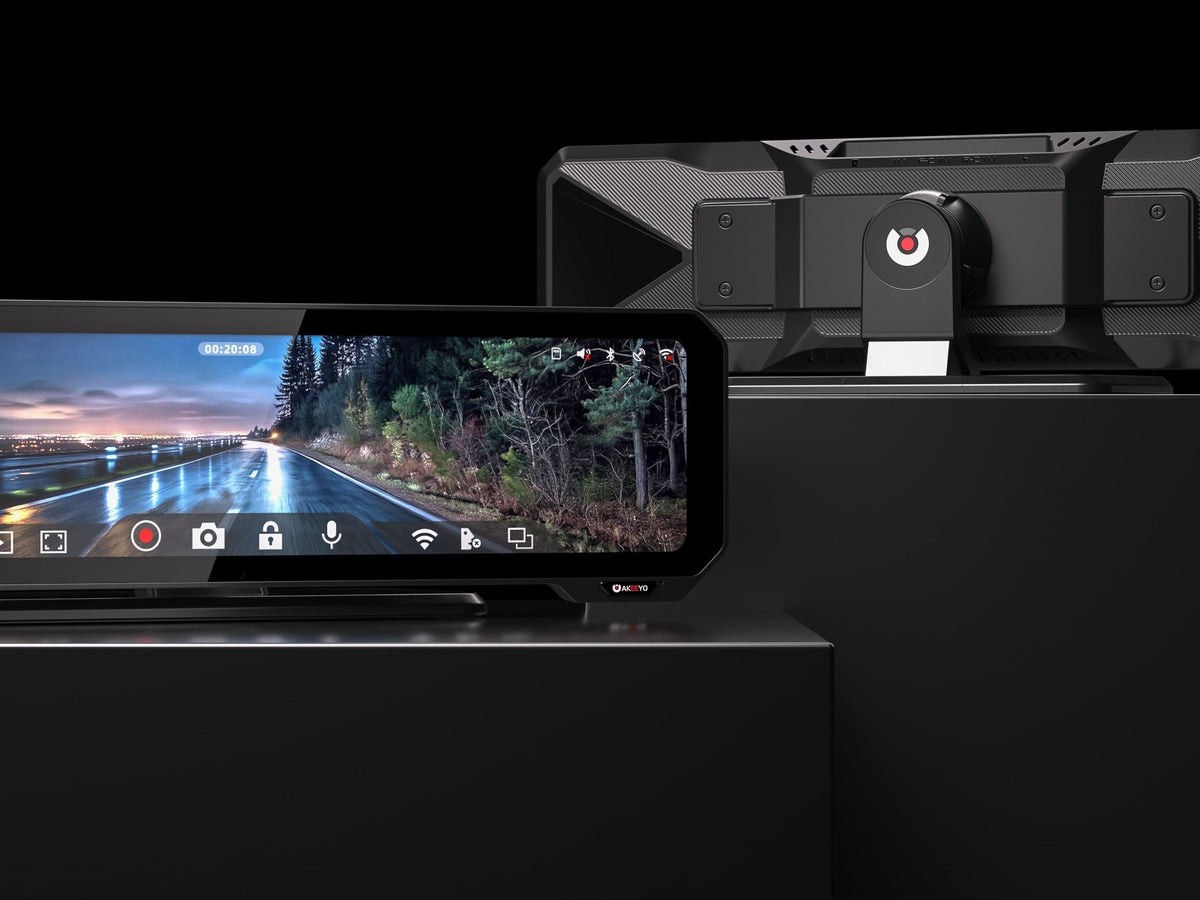
"Posso controlar o que vejo no ecrã da câmara de bordo?" — Num ecrã de 11,26 polegadas com três níveis de zoom, sim.
A sua perspetiva. O seu enquadramento. Um toque.
A maioria dos ecrãs de câmara de bordo fazem-no apertar os olhos para um selo e aceitar o enquadramento que a lente dita. O NV-X2 entrega-lhe os controlos.
Comece pelo ecrã: um ecrã táctil de 11,26 polegadas com 800 nits, com um sensor de luz ambiente que lê o que o rodeia e ajusta o brilho automaticamente — visibilidade nítida ao meio-dia, calma sem reflexos à meia-noite. Nunca toca numa definição de brilho; nunca desbota nem o ofusca.
Depois assuma o controlo do enquadramento: três níveis de zoom — 1x, 2x, 4x — permitem-lhe definir o quão ampla ou focada a pré-visualização em direto aparece no ecrã. Quer a visão completa da via? Mantenha-se amplo. Quer a pré-visualização mais centrada na estrada à frente? Aproxime com um toque. Você decide o que o ecrã lhe mostra enquanto conduz.
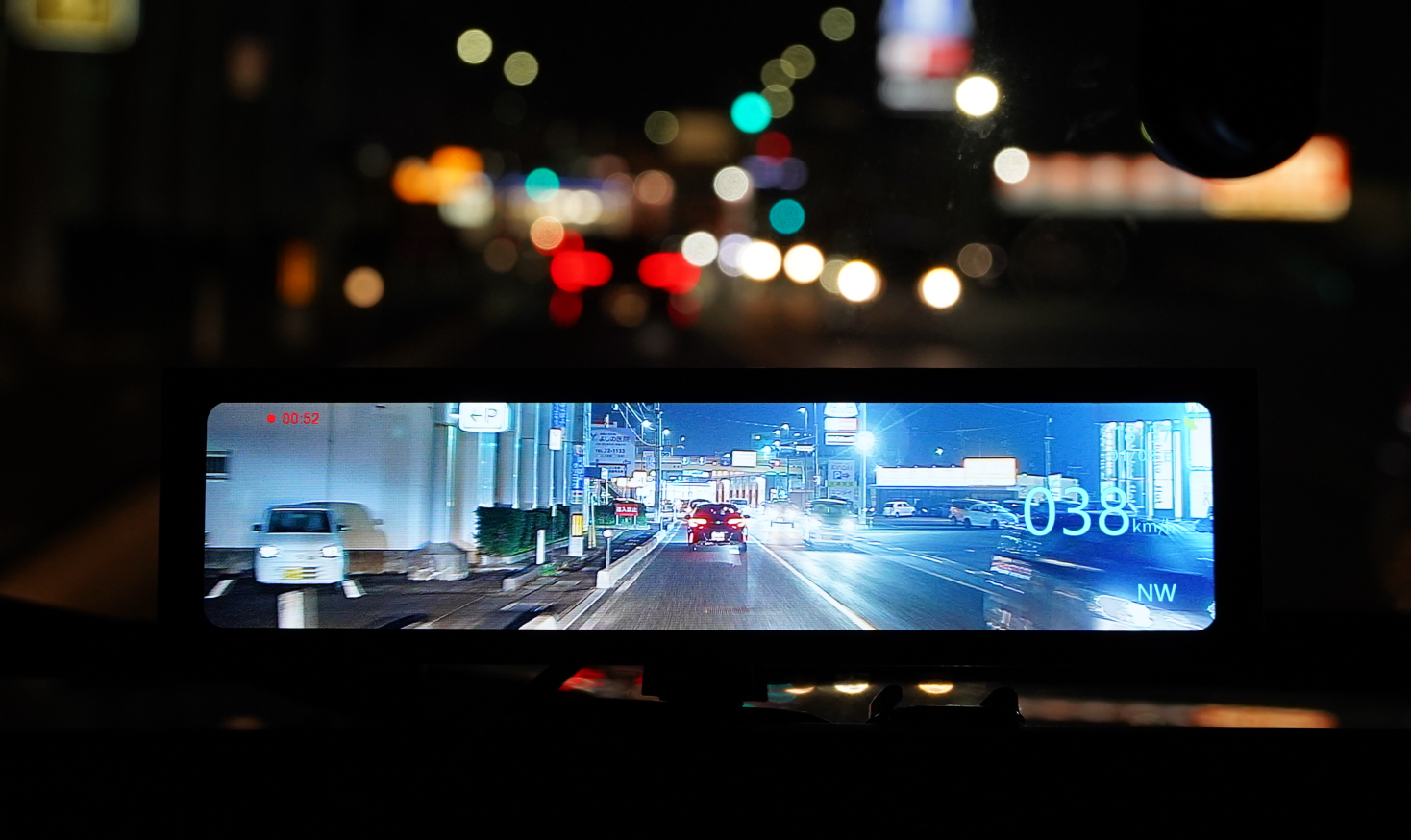
E quando liga o módulo GPS opcional, o ecrã transforma-se novamente: Modo HUD apresenta a sua velocidade, direção, data e hora num layout minimalista — os dados de que precisa, sem a desordem de que não precisa.
"O que mais deve fazer uma dash cam em 2026?" — Vigiar, bloquear, alertar e manter-se atualizada. Esta faz tudo isso.
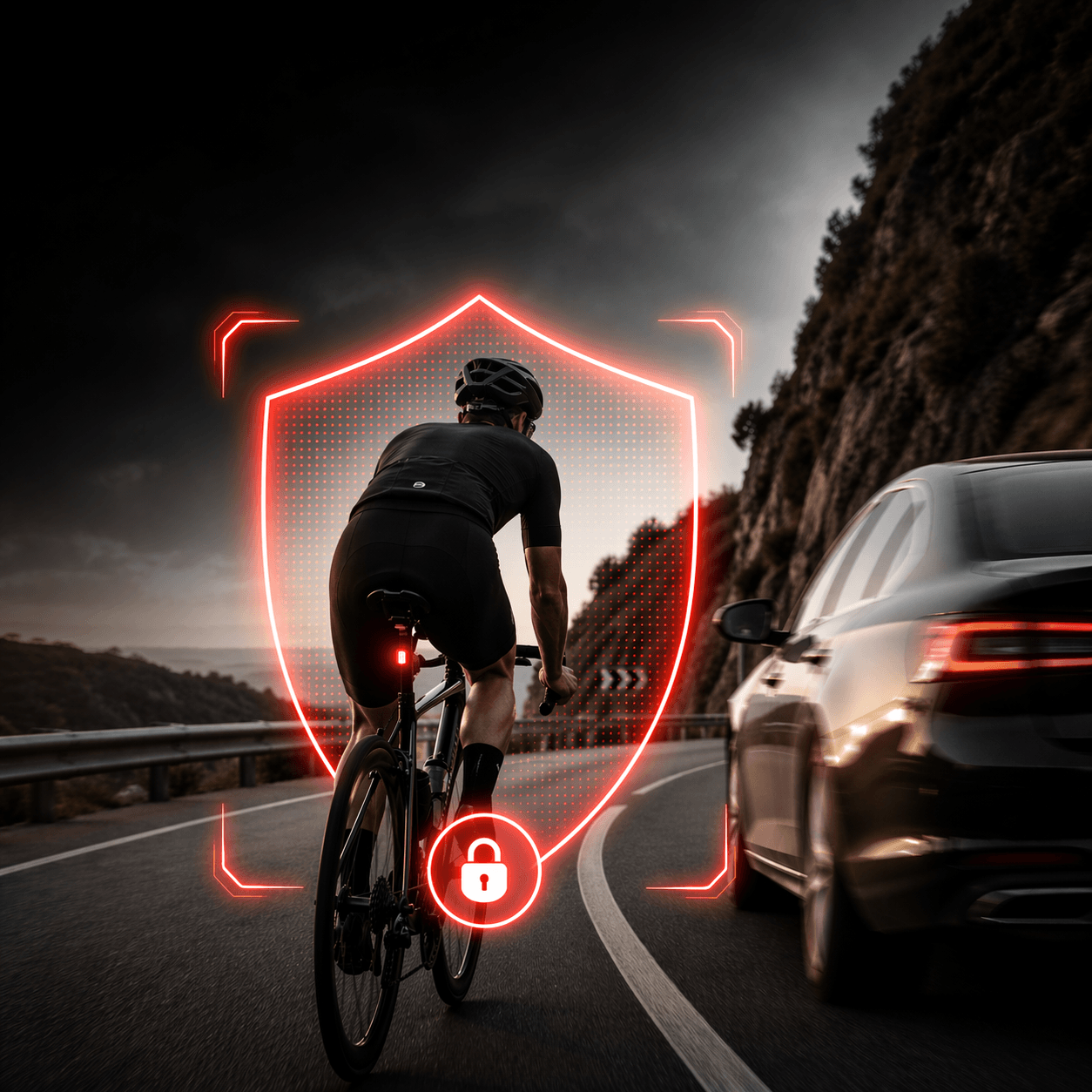
Não se limita a gravar a sua condução. Protege-a.
Quando ocorre um impacto, as evidências ficam protegidas. O integrado sensor G (sensibilidade ajustável: alta / média / baixa) deteta uma colisão enquanto o dispositivo está ligado, ativa a Gravação de Emergência e protege o ficheiro contra sobrescrita — depois retoma a gravação em ciclo sem falhas. As imagens mais importantes não podem ser gravadas por cima.
Quando se afasta, ele fica de vigia. Ative Monitorização de Estacionamento e o NV-X2 continua a proteger o carro depois de o ter deixado. (A energia contínua vem do dedicado kit de ligação direta 24H — o nosso guia de instalação irá orientá-lo.)
Quando engrena a marcha-atrás, ele muda consigo. O ecrã muda para a vista da câmara traseira assim que engrena a marcha-atrás — uma ajuda para a sua manobra, nunca um substituto dos seus espelhos e dos seus próprios olhos.
Quando as suas mãos estão ocupadas, a sua voz não está. Três comandos de voz — iniciar gravação, parar gravação, ativar a monitorização de estacionamento — abrangem os controlos a que realmente recorreria durante a condução, para que nunca precise de o fazer.
Quando a estrada esconde um carro, o BSD não. Com tecnologia de IA, a Deteção de Ponto Cego adiciona uma camada de consciência onde os espelhos não chegam.
Quando os seus pneus perdem pressão, o seu ecrã avisa-o. Adicione os opcionais sensores TPMS e os dados da pressão dos pneus em tempo real chegam diretamente ao ecrã principal — uma combinação que raramente encontrará nesta categoria.
Quando chega um firmware melhor, ele instala-se sozinho. Wi-Fi 5GHz e, sem necessidade de palavra-passe, o emparelhamento Bluetooth ligam-no à aplicação complementar em segundos; Atualizações OTA via Wi-Fi mantêm o dispositivo atualizado sem cabos e sem trocas de cartões. Reveja, transfira e gerencie as suas gravações a partir do seu telemóvel.

Concebido para se adaptar ao seu carro, não o contrário.
Um sistema. Todas as configurações.
Os acessórios oficiais deixam o NV-X2 adaptar-se ao seu veículo: uma câmara interior AHD para cobertura do habitáculo (montagem no vidro traseiro e não só), o kit de ligação direta 24H para monitorização de estacionamento, sensores TPMS de 4 rodas, e um suporte traseiro em ângulo reto projetado para vidros traseiros quase verticais — donos de MPV, esse é para vocês.
Funciona em veículos de 12V–24V e suporta -4°F a 158°F (-20°C a 70°C), por isso os painéis de bordo no verão e as manhãs de inverno estão ambos dentro das especificações.
O objetivo nunca foi a câmara.
Uma câmara de bordo é um produto estranho: compra-se na esperança de nunca precisar dela. Todos os recursos nesta página — a abertura F1.0, os canais duplos 2K, os ficheiros de emergência bloqueados — existem para momentos que preferia que nunca acontecessem.
Mas, se um desses momentos acontecer, a diferença entre uma imagem preta e uma filmagem nítida é a diferença entre a sua palavra e a sua prova. Entre um argumento e uma resposta.
É para isso que a NV-X2 foi realmente concebida. Não para tornar a condução mais complicada — mas para tornar a noite, o inesperado e as consequências um pouco menos assim. Para que, quando a escuridão cair e algo acontecer, não seja você a ficar a adivinhar.
Conduza à noite sem conduzir às cegas. É essa a ideia.

Deixe um comentário
Todos os comentários são moderados antes de serem publicados.
Este site está protegido pela Política de privacidade da hCaptcha e da hCaptcha e aplicam-se os Termos de serviço das mesmas.