

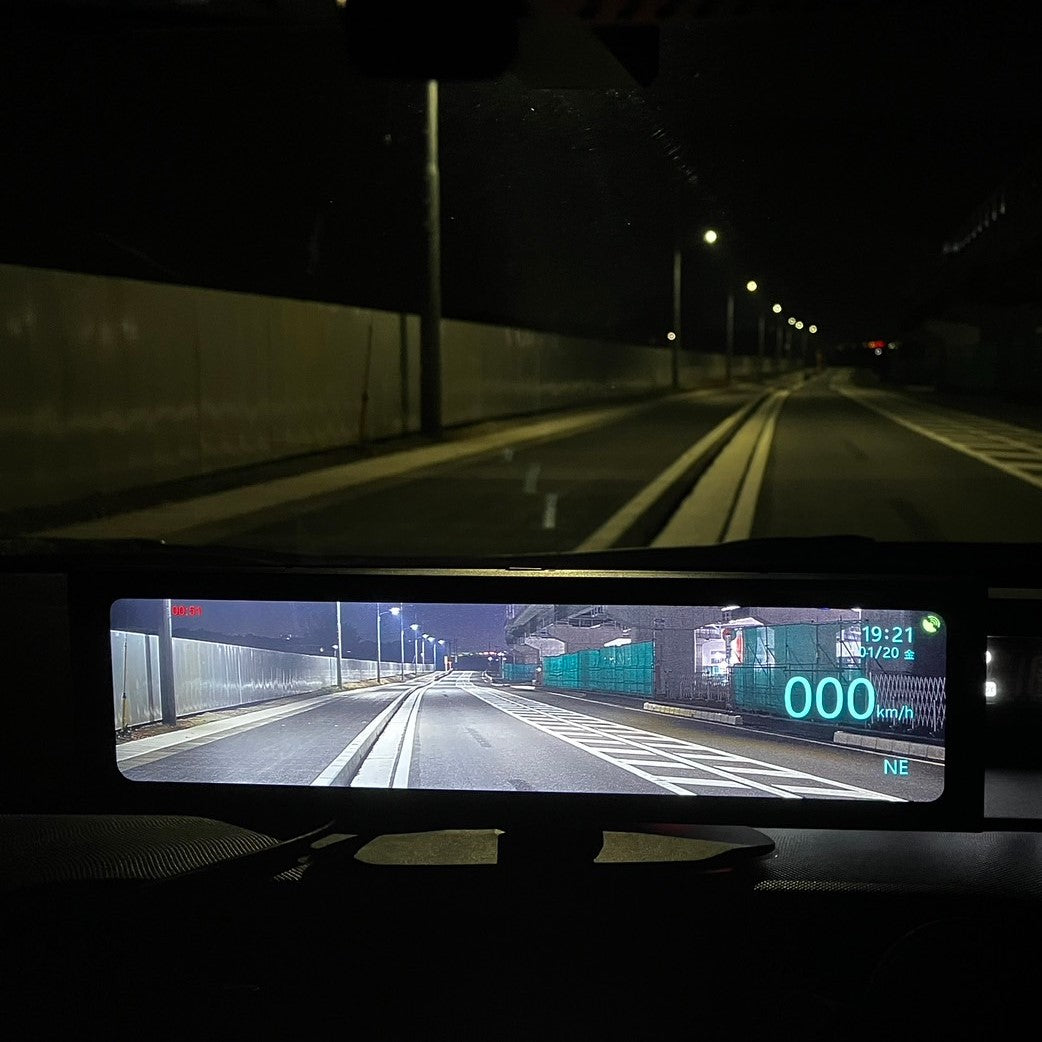
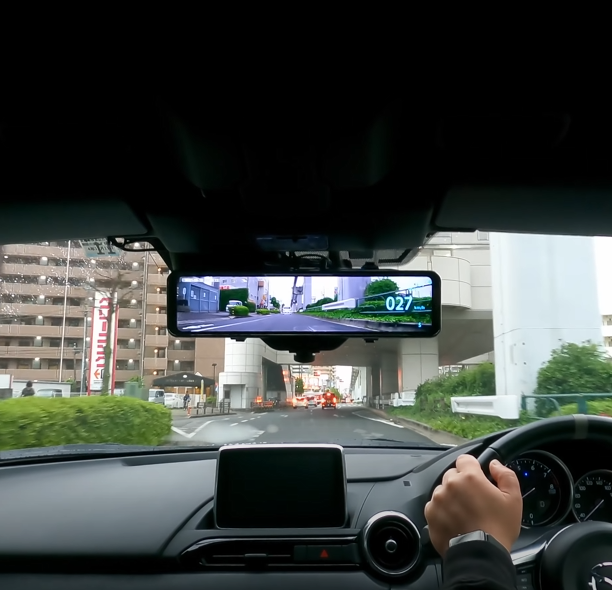
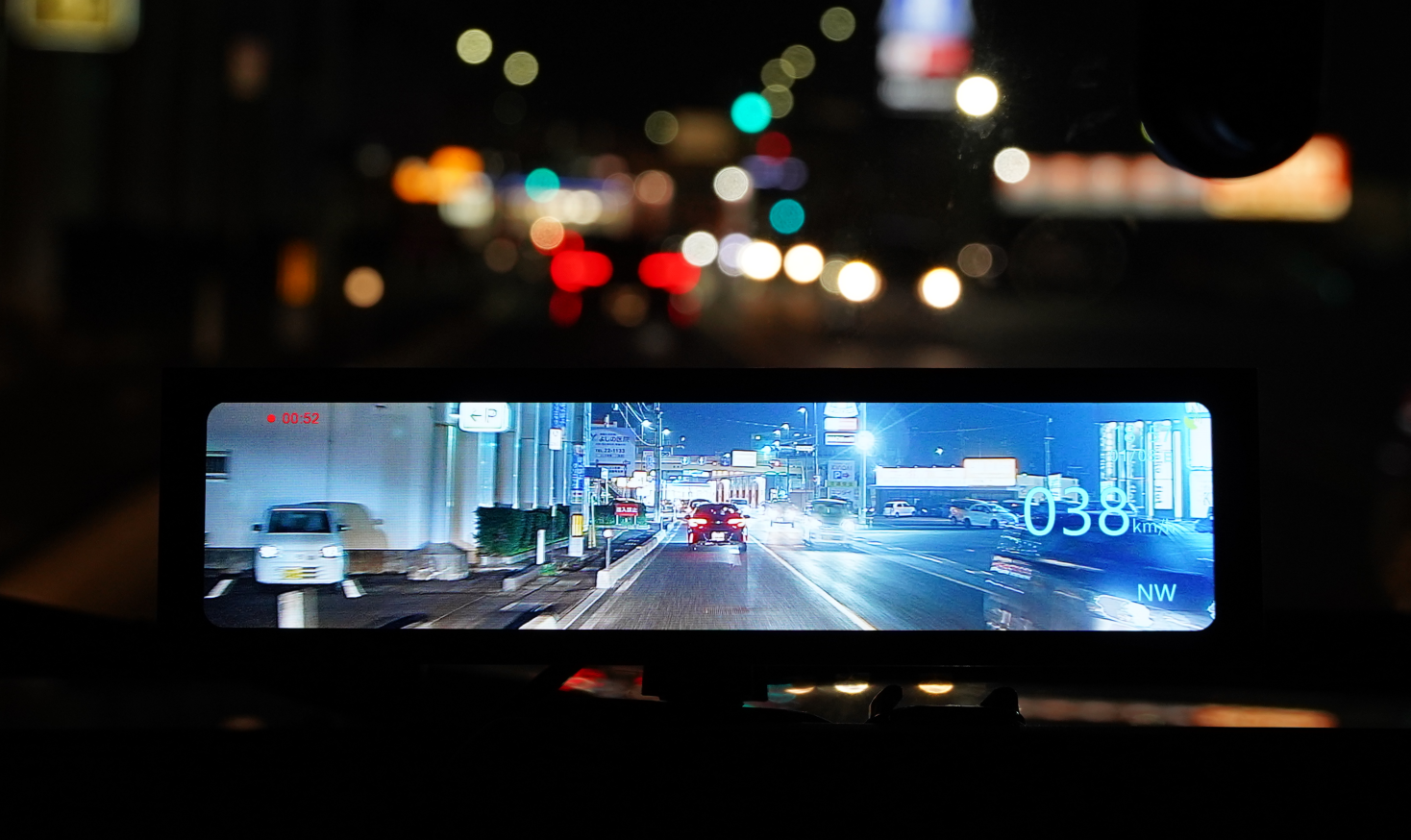
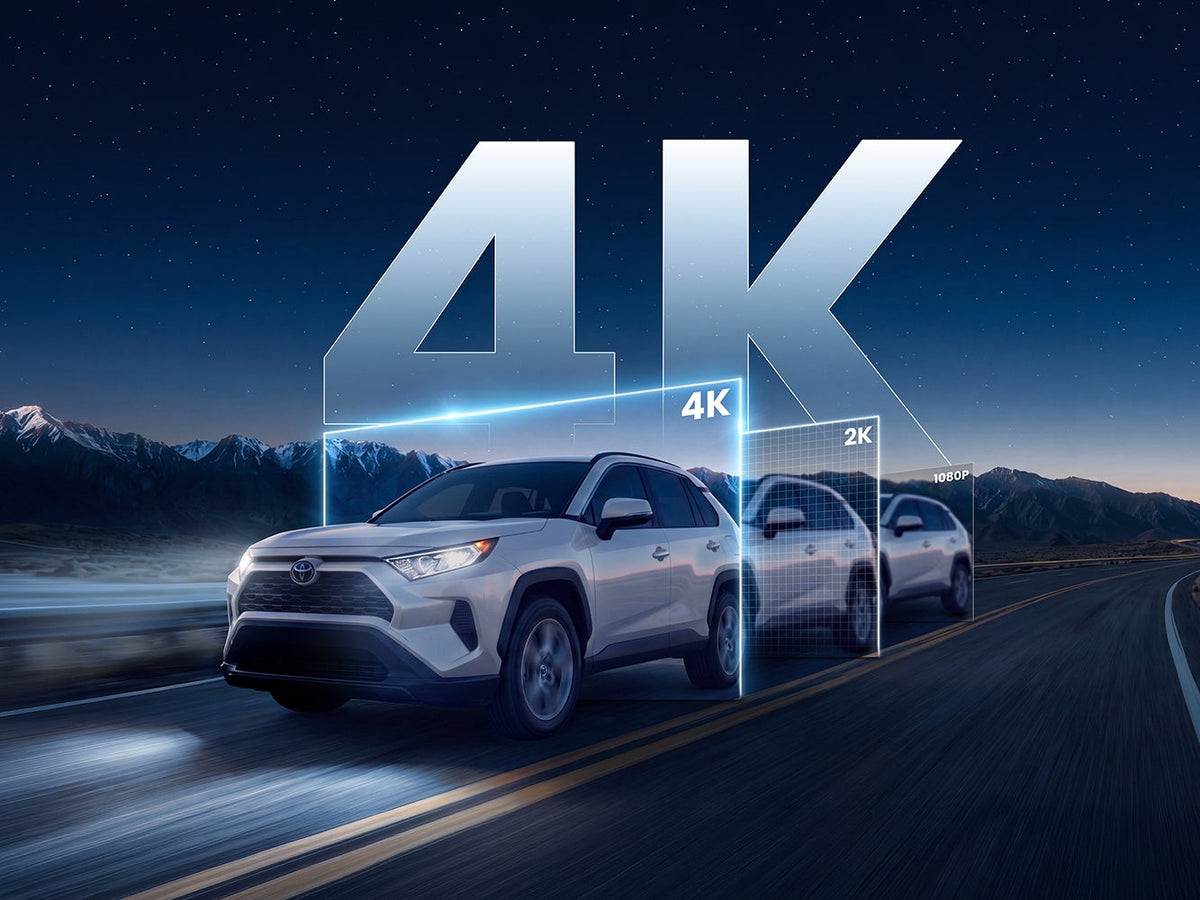
Daytime dash cam footage is easy. Almost any camera sold today will give you a readable plate at noon. The footage that matters is the other kind: a dark side street at 11 p.m., a tunnel exit into low sun, oncoming headlights on a two-lane road. That is where most dash cams turn plates into white smears and shadows into grey mush.
The National Safety Council notes that only about a quarter of driving happens at night, yet half of all traffic deaths do. (NSC, Driving at Night) If a dash cam is going to earn its place, it has to work in the dark.
This guide explains what decides night quality — the sensor, the aperture, and HDR — and why "4K" sits at the bottom of that list. The AKEEYO XPRO is used as the worked example because it was built around exactly these three parts.
Do dash cams actually work at night?
Some do. Many do not, and the reason is physics, not marketing.
A camera makes a picture by collecting light. At noon there is more light than the sensor can use, so even a cheap camera looks sharp. At night there is very little, and the camera has two bad options: leave the shutter open longer, which blurs anything that moves, or turn up the gain, which adds grain. Add a pair of headlights or a lit sign and the camera faces a third problem: the bright spots blow out to pure white while the rest of the frame stays black, and the plate is somewhere in between.
That is why night footage fails in two opposite ways — too dark to read, or too bright to read. A good night camera has to fix both at once.

What is Sony STARVIS 2, and why does the sensor matter more than 4K?
The sensor is the part that turns light into data. Its size, its pixel design, and how it handles very bright and very dark areas set the ceiling for everything else. No amount of software can recover detail the sensor never captured.
STARVIS is Sony's family of back-illuminated image sensors designed for security and low-light use. Sony describes these sensors as built to capture subjects reliably in dark places and in scenes with large differences in brightness, with a back-illuminated structure that moves the wiring behind the light-collecting layer so each pixel gathers more light. STARVIS 2 is the second generation, with a redesigned photodiode surface that Sony says significantly improves near-infrared sensitivity.
The XPRO uses the Sony STARVIS 2 IMX678. It is a 4K sensor, but resolution is not the point. The point is that it was designed for the two scenes that break ordinary cameras: very low light and very high contrast.
Why does this matter more than 4K? Because a 4K sensor built for daytime still records 4K of noise at night. Sharpness only helps when there is clean signal to sharpen. A low-light sensor gives the camera clean signal to begin with; the 4K resolution then turns that into a plate you can read rather than a plate you can only see.
What does an F1.08 aperture do for night footage?
The aperture is the opening in the lens that lets light through to the sensor. The f-number tells you how large it is, and the scale runs backwards: a smaller number means a larger opening and more light.
Many dash cams use lenses around F1.8 to F2.0. The XPRO's lens is F1.08. Going from F2.0 to F1.08 is a little over a stop and a half, which in plain terms means roughly three times the light reaching the sensor in the same instant.
Why does that help? Remember the two bad options from earlier: a longer shutter (motion blur) or more gain (grain). More light through the lens means the camera needs less of either. A passing car's plate stays sharp because the shutter can stay short, and the shadows stay clean because the gain can stay low. The sensor decides how well the camera uses light; the aperture decides how much light it gets to use. On the XPRO, both were chosen for the dark.

How HDR keeps headlights and license plates readable at the same time
The third piece solves the contrast problem. In a single exposure, a camera has to pick one brightness level for the whole frame. Expose for the dark road and oncoming headlights become a white glare that swallows the plate behind them. Expose for the headlights and the road disappears.
HDR (high dynamic range) captures more than one exposure and combines them, keeping detail in the bright areas and the dark areas at the same time. The practical result is the scene that matters most in a dispute: the other car's plate stays readable even when its headlights are pointed straight at you.
The XPRO supports HDR, and this is where the three parts work as a system. The STARVIS 2 sensor is designed for high-contrast scenes, the F1.08 lens gives it enough light to work with, and HDR uses that headroom to hold both ends of the frame.
Tunnels, oncoming headlights, unlit roads: three scenes that separate good from bad
Tunnel entry and exit. The light level changes by a huge factor in a second or two. A weak camera goes black on the way in and white on the way out, losing several seconds of footage at each end. A low-light sensor with HDR adjusts fast enough to keep the vehicles around you visible through the transition.
Oncoming headlights at night. This is the classic plate-killer. Without HDR, the plate sits inside a glare bloom. With a high-contrast sensor and HDR, the glare is contained and the plate stays legible as the car passes.
Unlit residential street or rural road. No streetlights, only your own headlights. Here the aperture and sensor do the work. More light through the lens and a sensor built for low light mean the camera can see the car, the plate, and the road edge instead of a dark frame with two bright dots.
No camera makes night look like day, and a plate at the far end of a dark parking lot is still a hard target. The difference is that a camera built for low light keeps footage usable in the common night scenes, where an ordinary one gives you something you can watch but not use.
What to look for on a spec sheet before you buy
Resolution is the number every listing shows first. For night performance, read it last. Check these three lines instead:
- Sensor model. Look for a named low-light sensor, not just "HD sensor." Sony STARVIS and STARVIS 2 are the ones to look for in a dash cam, and the model number (such as IMX678) tells you exactly what is inside.
- Aperture. A lower f-number means more light. F1.8 is common; anything near F1.0 is designed with night in mind.
- HDR or WDR. Without it, headlights will blow out the plate no matter how good the sensor is.
If a product page lists 4K but skips the sensor model and the aperture, that is usually a sign the camera was built for the daytime spec sheet rather than the 11 p.m. side street. Our RAV4 dash cam buyer's guide walks through the rest of the spec sheet.
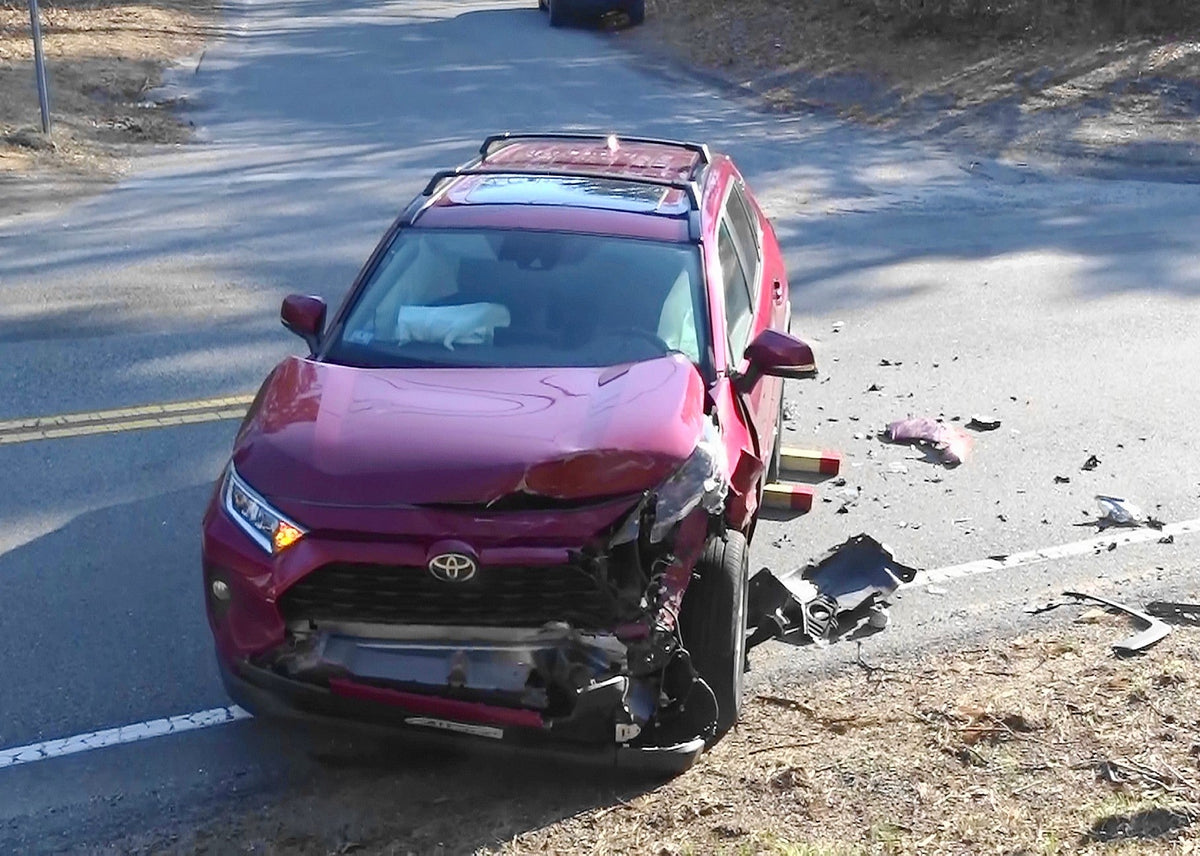
Half of serious crashes happen in the hours when most cameras struggle. The sensor, the aperture, and HDR are what decide whether yours is one of them.

Leave a comment
All comments are moderated before being published.
This site is protected by hCaptcha and the hCaptcha Privacy Policy and Terms of Service apply.